How Retaining Walls Improve Both Function and Appearance in Commercial Landscapes
A commercial landscape needs to do more than look attractive. It should also be safe, organized, and easy to maintain. When a property has slopes, uneven ground, or drainage concerns, creating that balance can become difficult. This is where retaining walls can make a major difference.
Retaining walls are hardscaping features designed to hold soil in place and create more stable outdoor areas. But their benefits go far beyond support. A well-designed retaining wall can improve drainage, reduce erosion, create usable space, and give a commercial property a more polished appearance.
For businesses, HOAs, office buildings, and other commercial properties, retaining walls can solve practical landscape problems while adding long-term visual appeal.
What Is a Retaining Wall?
A retaining wall is a structure that holds soil at different levels. It is often used on properties with hills, slopes, or changes in elevation.
Without support, soil on a slope can slowly move downhill. Heavy rain can make the problem worse by washing away soil and damaging landscaping.
Retaining walls help keep the soil where it belongs. They create a strong barrier that supports the landscape and allows property owners to make better use of uneven areas.
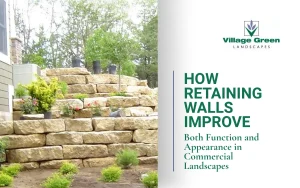
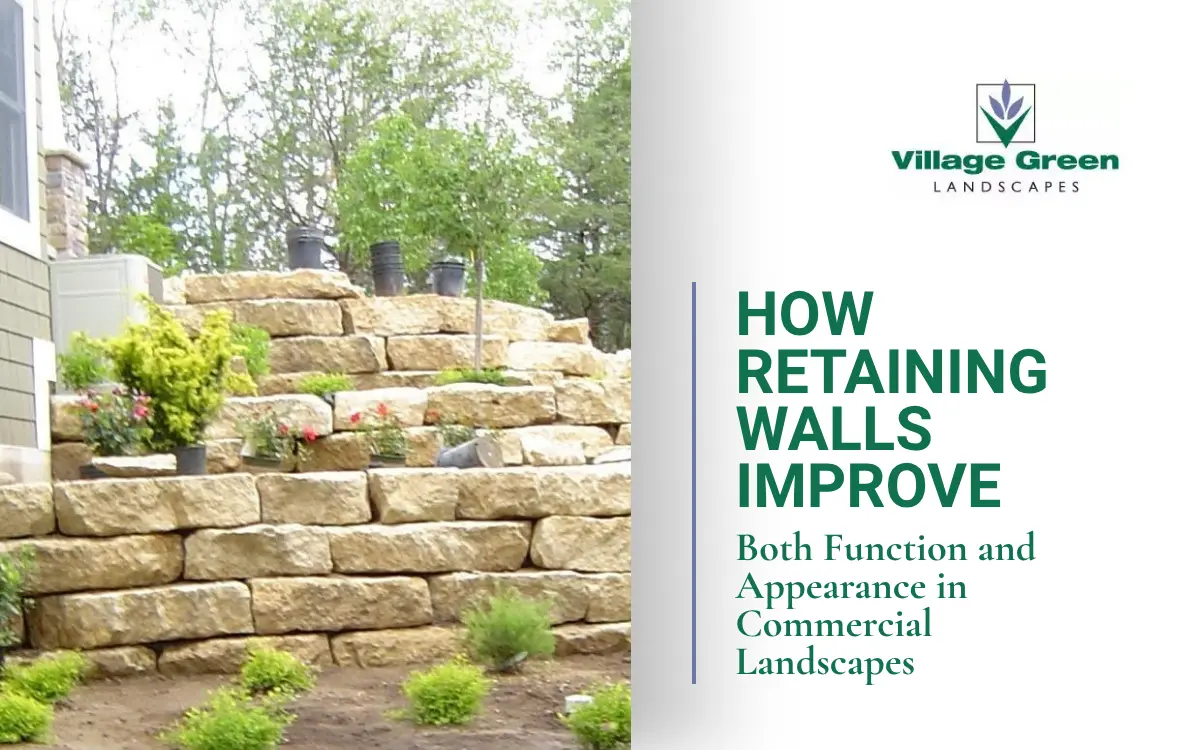
Depending on the design, retaining walls can be built with blocks, natural stone, or other durable materials. The right choice depends on the property, landscape style, and purpose of the wall.
Retaining Walls Help Control Soil Erosion
Erosion is a common problem on sloped commercial properties. Rainwater flows downhill and can carry soil, mulch, and other landscape materials with it.
Over time, erosion can create bare areas, expose plant roots, and damage landscaping. Soil may also wash onto sidewalks, parking areas, and other parts of the property.
A retaining wall helps slow this process by holding soil in place. It creates a more stable landscape that can better handle rainfall and runoff.
For commercial property managers, preventing erosion can also mean fewer repairs and less cleanup after heavy storms.
Improve Drainage Around the Property
Water management is an important part of any commercial landscape. When water does not drain correctly, it can collect around buildings, sidewalks, lawns, and planting beds.
Retaining walls can be designed as part of a larger drainage plan. Proper drainage features behind and around the wall allow water to move through the landscape without building up against the structure.
This can help reduce standing water and prevent soil from washing away.
At Village Green Landscapes, drainage and hardscaping can work together to create outdoor areas that are both attractive and functional.
Create More Usable Outdoor Space
Sloped land can be difficult to use. It may not provide enough level space for planting beds, walkways, seating areas, or other landscape features.
Retaining walls can transform those slopes into flatter, more useful sections.
For example, a commercial property may use retaining walls to create:
- Defined planting areas
- Level lawn spaces
- Outdoor seating areas
- Walkways
- Gathering spaces
- More organized entrances
Creating usable space can make the entire property feel larger and more functional.
For an HOA, this could mean creating more attractive common areas for residents. For a business, it could help create a welcoming entrance or outdoor gathering area for employees and visitors.
Add Structure to Commercial Landscape Design
Large commercial landscapes can sometimes feel open or unfinished. Retaining walls help create clear sections and add structure to the overall design.
A wall can separate a lawn from a planting bed, define a walkway, or create different levels within the landscape.
These clear lines make the property look organized and intentional.
Professional landscape design considers how hardscaping, plants, walkways, and other features work together. Retaining walls can become an important part of that plan instead of looking like a separate structure added later.
Improve Curb Appeal
Retaining walls serve a practical purpose, but they can also be attractive design features.
Materials can be selected to complement the building, walkways, and other hardscaping throughout the property. Natural stone can create a classic look, while manufactured blocks can provide a clean and modern appearance.
Landscaping around the wall can make it even more attractive. Flowers, shrubs, ornamental grasses, and other plants can soften the structure and add color.
A professionally designed retaining wall gives the property a finished look that customers, tenants, and visitors notice.
Create Stronger First Impressions
The appearance of a commercial property can affect how people view the business or community.
A landscape with visible erosion, damaged slopes, or washed-out planting beds may look neglected. A clean, structured landscape sends a different message.
Retaining walls help create an outdoor environment that feels cared for and professionally designed.
For businesses, that stronger curb appeal can support a positive first impression before customers even enter the building. For HOAs, attractive common areas can help create a community residents are proud to call home.
Protect Other Landscape Features
Erosion and water movement can affect more than lawns and planting beds. Over time, they may also create problems around sidewalks, patios, and other hardscape features.
Retaining walls help stabilize soil around these areas.
By controlling slopes and reducing soil movement, a properly designed wall can help protect nearby landscape investments.
This is especially important for commercial properties where outdoor features experience regular foot traffic. Keeping these areas stable supports both appearance and function.
Reduce Landscape Maintenance Problems
Commercial properties require regular care. When soil constantly washes downhill or mulch moves after every storm, maintenance becomes more difficult.
Retaining walls can help reduce these recurring problems.
By creating defined planting areas and controlling soil movement, walls help keep landscapes organized. Maintenance crews can spend less time fixing washed-out areas and more time keeping the property healthy and attractive.
This can make long-term landscape care easier and more efficient.
Choose Professional Retaining Wall Installation
A retaining wall needs to be more than attractive. It must be designed and installed correctly to handle pressure from soil and water.
Poor construction can lead to leaning, cracking, or drainage problems over time. Professional installation considers the slope, soil, drainage, wall height, and surrounding landscape before construction begins.
Village Green Landscapes provides hardscaping, landscaping and design, and drainage and irrigation solutions that can work together to improve commercial properties.
A thoughtful approach helps ensure the retaining wall fits naturally into the landscape while solving the property’s specific challenges.
Improve Your Commercial Landscape with a Retaining Wall
Retaining walls combine function and appearance in one hardscaping feature. They can control erosion, improve drainage, create usable space, protect landscaping, and add structure to commercial outdoor areas.
The right retaining wall also improves curb appeal and helps create a professional first impression for customers, employees, tenants, and residents.
If slopes, erosion, or uneven land are limiting your commercial landscape, Village Green Landscapes can help. Contact our team to explore retaining wall and landscape solutions designed to make your property more attractive, functional, and ready for the future.