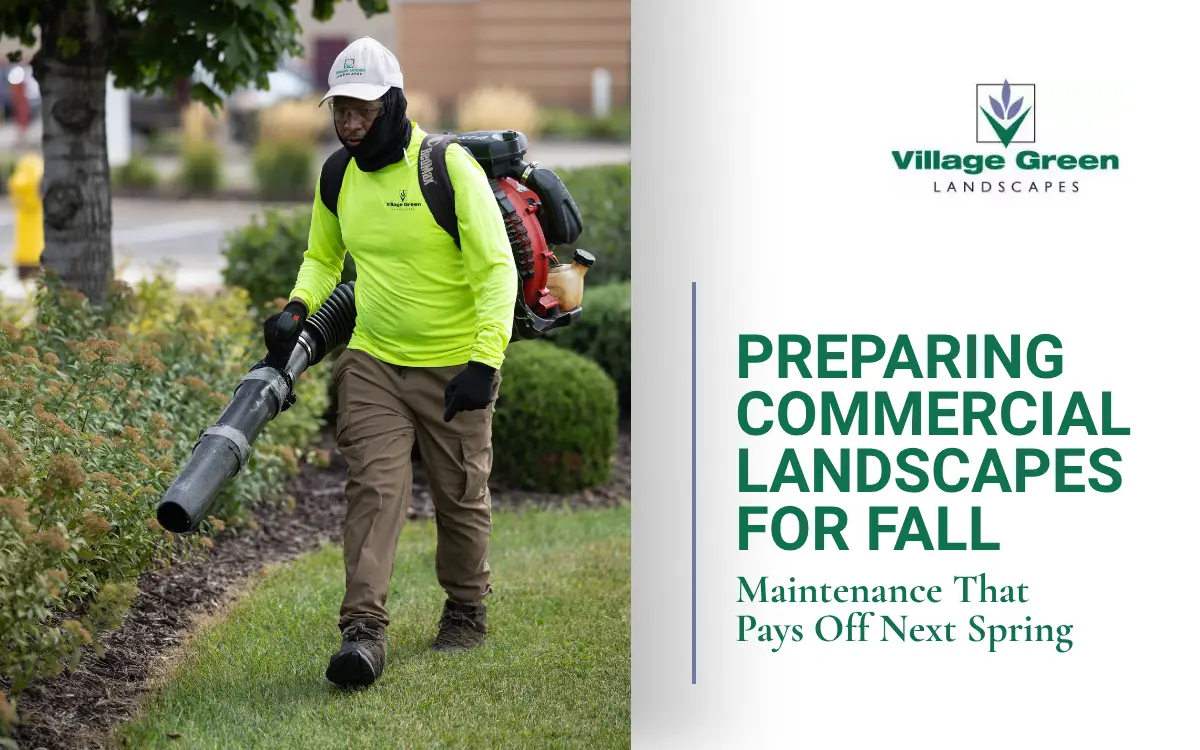
Preparing Commercial Landscapes for Fall: Maintenance That Pays Off Next Spring
Late summer is the perfect time to start thinking about fall landscape care. While lawns, trees, and planting beds may still look green, cooler weather will arrive soon. What property managers do now can have a major impact on how their commercial landscapes look next spring.
Fall maintenance is about more than cleaning up leaves. It gives lawns and plants time to recover from summer stress, prepares irrigation systems for colder weather, and helps prevent problems during winter.
For commercial properties, planning ahead can also reduce spring repairs and create a healthier, more attractive landscape when the growing season returns.
Village Green Landscapes helps businesses prepare outdoor spaces for changing seasons with professional commercial landscape maintenance, enhancements, and irrigation services.
Start with a Complete Landscape Inspection
Before fall arrives, walk through the entire property and look for areas that need attention.
Summer heat, storms, heavy foot traffic, and dry conditions can leave behind damage that is easy to miss.
Look for:
- Thin or brown areas in the lawn
- Dead or damaged plants
- Broken tree branches
- Overgrown shrubs
- Drainage problems
- Damaged hardscaping
- Irrigation issues
Finding these problems early gives you time to address them before winter.
It also creates a clear maintenance plan so your landscape team knows which areas need the most attention.
Give Your Lawn Extra Attention
Commercial lawns often experience heavy use throughout summer. Employees, customers, residents, and visitors can create compacted soil and worn areas.
Fall gives turf a chance to recover.
Continue mowing while grass is actively growing. Regular mowing keeps the lawn neat and prevents it from becoming too long before winter.
Fall can also be a good time to address thin or damaged areas. Depending on lawn conditions, professional maintenance may include aeration, overseeding, or fertilization.
Healthy turf going into winter has a stronger foundation for spring growth. Instead of starting the next season with bare patches and weak grass, you can begin with a healthier lawn.
Remove Leaves and Landscape Debris
Fallen leaves may look harmless, but thick layers can cause problems for commercial lawns.
Leaves can block sunlight and trap moisture against the grass. If they remain on the lawn for too long, they may contribute to weak or damaged turf.
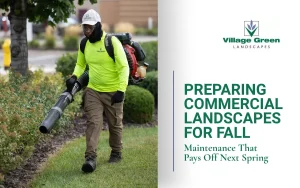
Regular leaf removal keeps the property clean while protecting lawn health.
It is also important to remove branches, dead plants, and other debris from planting beds and common areas.
For commercial properties, regular cleanup also supports curb appeal. Customers and tenants continue to visit the property throughout fall, so a clean landscape helps maintain a professional appearance.
Refresh Planting Beds
Planting beds are another important area to address before winter.
Start by removing weeds, dead annuals, and damaged plant material. Trim plants as appropriate and clean up debris around shrubs.
Fall is also a good time to inspect mulch levels. Mulch helps protect plant roots and can reduce sudden changes in soil temperature.
A fresh, clean planting bed also gives the property a polished appearance as summer color begins to fade.
Preparing these areas now can mean less cleanup and a stronger start when plants begin growing again in spring.
Inspect Trees and Shrubs
Trees and shrubs are valuable parts of a commercial landscape, but summer storms and heat can leave them stressed.
Check for broken branches, dead growth, or other signs of damage. Branches that appear weak should receive professional attention before winter weather adds more stress.
Shrubs may also need selective trimming to maintain their shape and prevent overgrowth around entrances, signs, windows, and walkways.
However, different plants have different pruning needs. Avoid cutting everything back simply because fall is approaching. Professional landscape teams can determine the right timing based on the plants growing on your property.
Check Your Drainage Before Fall Rain
Fall weather can bring periods of rain, making late summer a smart time to identify drainage problems.
Look for areas where water collects after storms. Standing water, washed-out mulch, soil erosion, and soggy turf can all point to poor drainage.
Ignoring these problems can allow them to become worse during fall and winter.
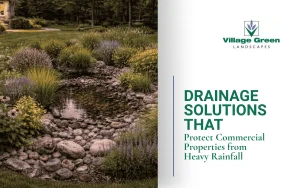
Proper drainage helps move excess water away from lawns, planting beds, walkways, and buildings. It also helps protect hardscaping and other landscape investments.
Addressing drainage concerns before winter gives your property better protection and can prevent larger repairs in spring.
Prepare Irrigation Systems for Colder Weather
Commercial irrigation systems work hard throughout summer. As temperatures fall, watering needs begin to change.
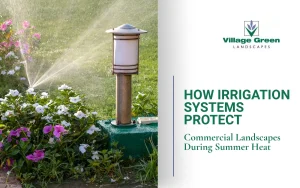
Late summer is a good time to inspect the system for leaks, broken sprinkler heads, poor coverage, or other problems. Making repairs now helps ensure the system is in good condition before it is shut down for winter.
Once the growing season ends, proper winterization becomes essential in cold climates. Water left inside irrigation components can freeze, expand, and cause damage.
Professional winterization protects the system so it is ready for startup next spring.
A well-maintained irrigation system also helps protect the investment you have made in your commercial landscape.
Inspect Walkways and Hardscaping
Plants are not the only parts of your landscape that need attention before winter.
Walkways, patios, retaining walls, and other hardscaping should also be inspected.
Look for cracks, loose pavers, uneven surfaces, or signs of erosion around hardscape features. Small problems may become larger after repeated freezing and thawing.
Commercial properties also need safe walking areas for employees, customers, tenants, and visitors.
Addressing visible issues before winter can improve safety and help protect hardscaping from further damage.
Plan Fall Landscape Enhancements
Fall preparation is not only about maintenance. It is also an opportunity to think ahead.
Property managers can review areas that did not perform well during summer and decide what could be improved next year.
Maybe an entrance needs more color. A planting bed may need a new design. A worn area could benefit from different plants or hardscaping. Drainage may need improvement in a section that repeatedly holds water.
Planning landscape enhancements early gives property managers more time to create a clear strategy and budget for future improvements.
Fall Maintenance Makes Spring Easier
Waiting until spring to fix every landscape problem can create unnecessary work and expense.
A proactive fall maintenance plan helps commercial properties enter winter in better condition. Healthy turf, clean planting beds, protected irrigation systems, and good drainage create a stronger foundation for the next growing season.
When spring arrives, your landscape can focus on new growth instead of recovering from preventable winter damage.
Prepare Your Commercial Property for the Season Ahead
A successful spring landscape starts months before the snow melts. The work completed in late summer and fall helps protect your property through winter and prepares it for healthy growth next year.
From lawn maintenance and landscape enhancements to drainage and irrigation care, every step contributes to a cleaner, healthier, and more professional commercial property.
Village Green Landscapes provides commercial landscape services designed to keep properties attractive and functional throughout changing seasons. Prepare now, protect your landscape investment, and give your property a stronger start next spring.