When it comes to transforming your landscape, retaining walls play a crucial role that often goes unnoticed. Think of them as both functional structures that hold back soil and beautiful design elements that can elevate your yard’s appeal. Whether you’re planning to tackle an uneven slope or create attractive garden tiers, the materials you choose are key to achieving not just stability but also a cohesive aesthetic. From concrete blocks to natural stones, every option brings unique benefits along with its set of challenges. Let’s get into the details so you can make a decision that improves your outdoor space’s beauty and functionality.
How to Install Retaining Walls
Installing a retaining wall begins with planning and designing. Before laying down the first stone, it’s vital to create a detailed plan. Measure the area where the wall will sit and understand its purpose—are you holding back soil, creating a decorative feature, or both? Decide on the height of the wall; taller walls typically require reinforcement to ensure stability and prevent undue pressure on materials.
Step I—Excavation and Base Layer
Excavate a trench that will serve as the foundation for your retaining wall. As a general guideline, aim to excavate a trench approximately one-tenth of the wall’s height. For example, if you’re constructing a six-foot wall, you could dig approximately 6 inches (ca. 15 cm) deep for the foundation. This depth provides a solid base for your retaining wall. The ground beneath must be compacted well; loose soil can lead to future problems by allowing movement as the earth settles. Following compaction, add a layer of gravel to enhance drainage and support; this ensures that water does not pool at the base, which can lead to swelling and shifting of materials. After establishing a sturdy foundation, it’s time to lay down your first course.
Step II—Laying the First Course
The first course of stones or blocks is crucial. Here’s where many enthusiasts can go wrong—if this initial layer isn’t straight or level, everything built upon it will likely go awry. Use a level tool during this process to ensure that each block sits evenly. It’s wise to begin from a corner and work your way inward or outward according to your plan. Take your time here; rushing can lead to unevenness that could compromise the entire structure later on. With your foundation established and your first row securely in place, it’s time to focus on building the overall wall itself.
Step III—Building the Wall
Begin stacking your chosen material carefully above the first course while maintaining consistency as you move along. Each layer demands attention—ensure they’re aligned properly and laid flat against one another. Backfill gravel behind each course as you build; this enhances stability and provides necessary drainage that keeps moisture away from jobsite materials.
Step IV—Finishing Touches
Cap off your wall with special capstones or blocks designed specifically for this purpose. These finishing touches not only complete the look but also help protect the upper edges of your structure from weather deterioration or potential wear caused by rain and debris buildup. Additionally, consider installing landscaping fabric behind the wall as part of the finishing touches—it acts as a barrier against soil erosion while allowing water to pass through unimpeded.
Choosing Concrete Blocks
Concrete blocks are indeed a popular choice for retaining walls, and it’s not without reason. Their versatility, durability, and ease of use make them an ideal match for various landscape designs and conditions. The fact that they come in an array of sizes, shapes, and colors allows homeowners to integrate these blocks seamlessly into their existing outdoor aesthetic. Imagine transforming an uneven backyard slope into a beautifully terraced garden using the right combination of concrete block styles.
Pros and Cons of Concrete Blocks
When weighing your options, it’s essential to consider both the advantages and disadvantages associated with concrete blocks.
Benefits:
- Durability: Concrete blocks are long-lasting, often enduring decades even under harsh weather conditions. Their sturdy nature can withstand significant pressures, making them reliable for slopes or areas prone to erosion.
- Versatility: Available in various designs and finishes, concrete blocks provide a wide range of options. Whether you seek a sleek modern look or something more rustic, there’s a style to complement your vision.
- Ease of Use: With their straightforward stacking style, many DIY enthusiasts find concrete blocks easy to work with. Once a solid footing is established and the blocks are aligned properly, the building process can flow smoothly.
- Low Maintenance: Over time, concrete blocks require minimal upkeep if installed correctly, appealing to busy homeowners seeking attractive yet functional solutions.
Drawbacks:
- Cost: While longevity leads to great value over time, concrete blocks can demand a higher initial investment compared to materials like timber or stacked stones.
- Installation Challenges: Professional retaining wall installation services may be necessary depending on your design complexity or block weight. If you’re uncomfortable managing large materials yourself, hiring experienced help can add to costs.
- Physical Weight: The durability of concrete blocks makes handling during installation tricky. Their size and weight pose logistical challenges if you’re doing this solo.
- Environmental Concerns: A common issue with any stone structure is that concrete can crack under severe freeze-thaw cycles. This could affect aesthetics unless preventative measures are taken during installation.
Selecting the right materials for your retaining wall ultimately hinges on balancing these pros and cons according to your specific needs and preferences—consider how you’ll use the area around the wall and what visual effects you want to achieve.
Benefits of Natural Stones
One major advantage of using natural stones like limestone, sandstone, and fieldstone is their unique aesthetic appeal. The interplay of textures and colors in these materials often brings an organic beauty to outdoor spaces. Imagine a retaining wall that not only holds back soil but also serves as a stunning focal point in your garden. With natural stone, you can achieve that rustic charm that perfectly complements the beauty of your landscape.
Aesthetic and Environmental Benefits
Each piece of natural stone tells its own story through distinctive patterns and shades, creating a visually rich environment. By incorporating such elements into your landscape design, you invite a sense of permanence and authenticity that man-made materials simply can’t replicate. Whether you opt for the warm tones of sandstone or the cool elegance of limestone, these stones effortlessly harmonize with the surrounding flora and terrain.
Beyond their allure, natural stones provide critical environmental benefits too. When sourced locally, they significantly reduce the carbon footprint associated with transportation. This choice supports sustainability and helps preserve the integrity of your local environment. Additionally, because natural stones are durable and weather-resistant, they require less maintenance over time compared to some artificial materials. This durability not only saves you money on repairs but also benefits the ecosystem by eliminating the waste generated through frequent replacements.
When selecting natural stones for your project, it’s crucial to consider factors such as texture, color compatibility with your existing landscape, and suitability for local climate conditions. By understanding these characteristics, you can make informed decisions that marry beauty with functionality.
Keeping these elements in mind illuminates how thoughtful material choices can enhance your spaces. Now, let’s explore how to plan effectively for your landscaping needs.
Designing for Landscape
The design of your retaining wall should feel harmonious with its surroundings. Visual flow is key. For instance, think about incorporating gentle curves instead of rigid straight lines; this can help create a more organic look that echoes natural landforms and makes the wall seem like a natural extension of your garden.
This curvature softens the visual impact and helps in planting smaller shrubs or flowers that can cascade beautifully over the edge, creating a lush, layered appearance. Alongside this, consider using terraced walls if you have a particularly steep area in your yard.
Terraced retaining walls allow for better water drainage and reduce pressure on any single wall, crucial for preventing structural failure over time. Each tier creates distinct planting areas where you can introduce varied plant life, adding texture and layers to your landscape.
Imagine a descending series of small plants, rocks, or ornamental grasses flowing gracefully down the slope; it’s visually stunning and functional while deftly addressing erosion risks.
Additionally, don’t overlook the materials you choose; they should reflect both durability and aesthetic appeal. Different materials—such as natural stone, brick, or concrete blocks—carry various textures and colors. Natural stones blend seamlessly with the earth, imparting an aged charm, whereas sleek concrete blocks lend a modern touch.
Incorporate your chosen material thoughtfully by matching or contrasting it to surrounding features such as pathways or patios for a cohesive look.
Finally, visualize how lighting plays into this design.
Lighting can dramatically change how your retaining wall looks at night and during certain times of the day. Integrate low-voltage lighting along the top or within the structure to highlight its features and provide safety while navigating your yard after dark.
Spotlights directed towards plants cascading from the wall create not only ambiance but also bring attention to exquisite details of your careful landscaping choices.
Conscious consideration of these elements in your wall’s design ensures a beautiful yet functional structure that enhances your landscape rather than detracts from it. Every decision—from form to material and lighting—creates an interaction with the surrounding environment, making your outdoor space more inviting and thoughtfully designed.
Integrating with Existing Elements
When you integrate a retaining wall with features already present in your landscape, you create a cohesive look that enhances the overall design of your outdoor space. Think of it as more than just a structure; it’s an opportunity to blend form and function.
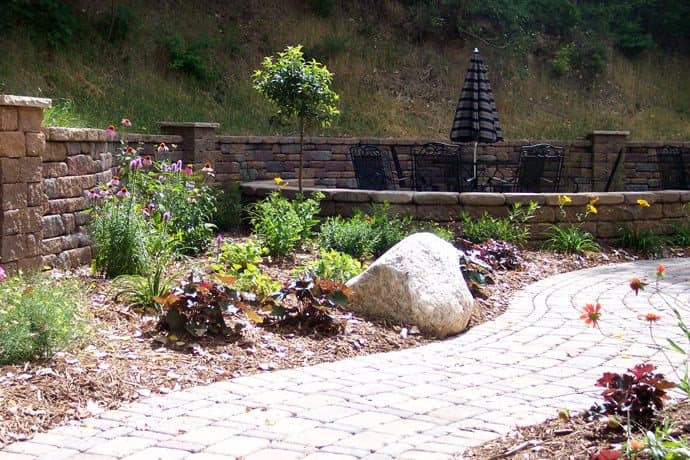
For instance, if you position a retaining wall adjacent to a patio, it can serve dual purposes: providing seating for guests while simultaneously defining different areas within your yard. This elevates the utility of the wall and transforms your outdoor experience.
A perfect integration strategy starts with considering what natural assets your yard already possesses. Existing plants, mature trees, and established garden beds should influence the wall’s placement and design. For example, rather than clearing away a beautiful flowering bush, consider constructing the wall in such a way that it cradles or incorporates these plants. You might even think about building raised garden beds directly into the structure of the wall itself—merging beauty with practicality.
Incorporating features to enhance functionality includes adding:
- Lighting: Installing garden lighting along the top of the wall accentuates its shape at night and transforms it into a stunning focal point that draws attention even after sunset.
- Seating Options: Building seating into the wall’s design invites relaxation and social gatherings right in your yard, making it an extension of your home.
By creatively merging a retaining wall with these elements, your landscape becomes more inviting while maintaining structure and purpose. The right integration ensures that every feature feels deliberate rather than haphazard.
Managing Project Costs
Cost management plays a pivotal role in the overall success of any landscaping project, especially when it comes to constructing retaining walls. From the initial planning stages to the final touches, every expense must be tracked methodically. It’s essential to develop a comprehensive budget that encompasses all aspects of the project, including materials, labor, and potential unexpected expenses.
Budget Planning
To kick things off effectively, begin by setting a reasonable budget. This should include every item required, from retaining wall materials to necessary tools and permits. Don’t forget to consider labor costs as well—whether you’re hiring professionals or bringing in friends for assistance. If you’re inexperienced or lack proper equipment, hiring a contractor could save you time and prevent costly mistakes.
Let’s say you’re planning a medium-sized retaining wall, roughly 20 feet long and 3 feet high. You might anticipate spending anywhere between $400 and $800 solely on basic materials like concrete blocks. To break it down further, here’s an estimated list of costs:
- Concrete blocks: $200-$400
- Gravel and sand: $100-$200
- Landscaping fabric: $40-$80
- Tools and equipment: $60-$120
It’s important to remember that these figures can fluctuate based on your local market—pricing can vary greatly from one area to another. Therefore, shop around and compare prices before settling on suppliers to find the best deals.
Once you’ve established your budget and accounted for all necessary costs, you’ll be better prepared to secure quotes from contractors or determine your own labor needs.
Ensuring Proper Drainage
When you think about building a retaining wall, it might be tempting to focus solely on aesthetics and materials. However, ensuring proper drainage is often what separates a successful project from a disastrous one. Water management cannot be overlooked; without it, you’re inviting potential failures that can compromise both the structure and functionality of your wall.
Imagine the disappointment when a beautifully crafted wall begins to bow or crumble because water pressure has built up behind it. This scenario is all too common when drainage is neglected, leading to long-term damage.
Drainage Techniques
There are several effective techniques for managing water around your retaining wall. The most reliable method involves incorporating drainage pipes directly behind the wall. These pipes serve as conduits that redirect water away from the structure, thus reducing the risk of pressure buildup.
It’s important to use gravel backfill in conjunction with these pipes because gravel allows water to flow freely while still providing support around the wall. The perforated pipes collect excess moisture and transport it away, keeping everything well-drained and stable.
Additionally, weep holes should be considered critical assets in any retaining wall project. By cutting holes into the wall at regular intervals, you create points where accumulated water can escape naturally. This passive system will help maintain equilibrium within the soil and pressure levels behind the wall, preventing any unforeseen consequences. Just remember: positioning weep holes at strategic points can make all the difference.
By integrating these methods as part of your installation process, you’re taking significant steps toward constructing a retaining wall that balances both function and beauty. This ensures it withstands time and weather while enhancing your landscape’s overall appeal. Building a durable retaining wall requires careful attention to drainage to ensure longevity and effectiveness. Your investment in thorough planning can yield lasting benefits for your landscape.
Why Choose Village Green Landscapes for Your Retaining Wall Installation?
When it comes to enhancing the beauty, stability, and functionality of your outdoor space, Village Green Landscapes is the trusted expert for retaining wall installation services in the Twin Cities, MN. Our team of skilled professionals specializes in designing and constructing retaining walls that not only improve your property’s aesthetics but also provide essential structural support to prevent soil erosion and manage water drainage effectively. Don’t let erosion, drainage issues, or an uneven landscape take away from the beauty and safety of your property. Trust the experts at Village Green Landscapes to design and install a stunning and structurally sound retaining wall that meets your needs. Contact us today!